
The Mariavites: Heresy, the Apocalypse, and Poland's Female Saviour (Equinox, 2025)
Damian Cyrocki discusses his new book on the Polish apocalyptic movement.
In 1975, Oxford University Press published The Third Adam, a fascinating book by Polish prose writer, poet, and literary historian Jerzy Pietrkiewicz (the author changed his surname to Peterkiewicz to make it easier to reach a foreign audience). It was the only English-language book devoted to the Mariavite movement, an independent Catholic group that was excommunicated from the Roman Catholic Church at the end of 1906. The movement dates back to 1893, when nun Feliksa Maria Franciszka Kozłowska (1862-1921) claimed to have received revelations of Divine Mercy instructing her to establish a congregation of Mariavite priests. Since Oxford University Press published a book about the Mariavites, readers could expect it to be a reliable historical study discussing the most controversial reforms within the movement.
Unfortunately, it soon became apparent that Peterkiewicz had not approached his task with due diligence and had simply fantasised about certain topics. For example, he allegedly obtained some of his information from the son of a Mariavite bishop whom he had never met. As the reader was not informed that some parts of the book were pure literary fiction, they could form a false opinion about the Mariavites. Being a relatively small movement even in Poland, they were unable to defend themselves effectively because their corrections did not reach a wide audience. Representatives of the movement could only dream of a prestigious and influential publishing house such as Oxford.
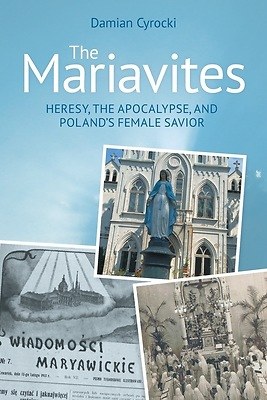
Years passed, and English-speaking readers who, for various reasons, learned about the existence of Mariavites and wanted to explore the subject but lacked the opportunity to learn Polish and study the sources, were dependent on Peterkiewicz's publication. I have now attempted to offer a corrective account in an English-language publication: The Mariavites: Heresy, the Apocalypse, and Poland's Female Saviour (Equinox, 2025). I aim to provide an analysis of the movement without an apologetic tone. By treating the Mariavite sources fairly, we can gain insight into their history, personalities, and ideas.
The Mariavites presents the history of the movement's origins, focusing on how the first Mariavites understood the establishment of the Kingdom of God on earth. It is primarily based on original Polish historical documents from the period before the Second World War. These materials are not easily accessible and have never been translated into English. I also conducted numerous interviews with contemporary followers of Mariavitism and historians working on the subject.
The book is divided into six chapters.
The first chapter discusses methodology. It addresses terminological issues, namely the meaning of the words ‘Mariavitism,’ ‘Catholicism,’ and ‘Mateczka’ (as members of the Mariavite Church called Kozłowska), and reviews the Mariavite literature. Since some of these publications were intended for reading by members of the Church only, ethical issues related to the use of these works are also considered. At the very end of the chapter, the structure of the work and its objectives are discussed.
The second chapter analyses the political, cultural, and social situation in 19th-century Poland that led to the emergence of Mariavitism. This is intended to help the reader understand why eschatological ideas could have developed so easily in the Congress Kingdom of Poland and why Mariavitism should not be viewed as an aberration, but rather as a phenomenon whose emergence can be easily explained within the historical context. Polish Messianists, who were considered by the first Mariavites to be harbingers of the coming of the Kingdom of God, are also briefly presented. Their ideas were widely used, studied, and reinterpreted by the Mariavites, helping them shape their theology. Finally, the chapter includes a brief biography of Mateczka before she received her revelations in 1983.
The third chapter begins with an analysis of the most momentous event in Mariavite history, namely Kozłowska's revelation of 1893, which was interpreted as a sign of the fulfilment of the Apocalypse. Since the revelations were conveyed by a woman, she was ultimately recognised as the ‘a woman clothed with the sun’ from Revelation 12:1, whose role was to fulfil God's will perfectly. The chapter then focuses on the spread of the movement and its ideas within the Roman Catholic Church. Finally, it shows why the movement was ultimately condemned by the Pope and the Catholic hierarchy in 1906.
The fourth chapter focuses on the years after the schism but before Mateczka’s death. This was a crucial period for the formation of the Mariavites' identity and ecclesiology. It discusses the problem they faced in trying to understand how the Catholic Church could become the Great Babylon, the Mother of Harlots, and Abominations of the Earth (Rev 17:5), and at the same time remain the Bride of God. The issue of establishing criteria that would help Mariavites recognise authentic revelations is also raised. The situation became particularly complicated when a woman began to claim that she was the recipient of new divine oracles that undermined Kozłowska's authority. The chapter ends with an analysis of the concept of discontinuing the celebration of the Eucharist in the Catholic Church and the meaning of the Book of Life mentioned in Revelation (3:5; 13:8; 17:8; 20:12).
The fifth chapter discusses the reforms introduced by Archbishop Kowalski between 1922 and 1935, which shook Polish society at the time. Due to the vast amount of data, it was not possible to discuss all the changes in detail. Therefore, the focus is on the three most important ones, namely: the marriage of priests and nuns, the ordination of women, and the people’s priesthood. The primary reason for selecting these three reforms is that they were all inextricably linked to the concept of the Kingdom. In addition, allegations of polygamy and sexual immorality, of which the Mariavites were accused at the time, are also taken into account. First, however, this chapter analyses how Maria Franciszka and Kowalski were perceived after 1921. In both cases, the perception of their personalities changed over time under the influence of studies of the Book of Revelation, ancient Christian sources, and Polish Romantic literature.
The sixth chapter reviews the schism within the Mariavite Church that occurred in 1935. Depending on one's interpretation, this was either the end of plans to establish the Kingdom and fulfil the Apocalypse, or another step towards achieving this goal. This part of the book discusses the actions of Kowalski's opponents in relation to the reforms and the concept of the Kingdom. It also shows that the archbishop and his supporters certainly did not give up on their goals and introduced another element of the Kingdom concerning the nature of the Holy Trinity, which was reinterpreted in such a way that there was room for both Mary, the mother of Jesus, and Mateczka Kozłowska. At the end of the chapter, an analysis of the idea of the Kingdom and its apocalyptic elements is presented.
This book is also intended for readers interested in the reception of the Book of Revelation by various Christian churches, as well as for those intellectually engaged with new religious movements. Since the complete history of the Mariavites has not yet been told in English, it is a natural starting point for anyone seeking knowledge on this subject. The matter of the Mariavites has been discussed in more detail in Polish literature, but there are still many aspects that need to be reconsidered in light of new textual evidence that occasionally comes to the attention of researchers interested in the phenomenon. As indicated in the introduction to this entry, many English-speaking readers derive their knowledge of Mariavitism from Peterkiewicz's work, which has proven to be not a proper historical study, but rather a literal fantasy with some historical elements in the background. It certainly would be beneficial for the reader to compare the information contained in that work with the information presented in this study. Finally, it is worth noting that the Mariavites still exist, and despite their small numbers, they have much to say about both the Apocalypse and the Kingdom of God.

